 2024
2024MemePad
A Solana launchpad with custom indexing, creator economics and fee sharing.
42,000 users · $1.1M raised · under three months
55 since 2017. Six worth your time are below. The rest open by discipline.
2024A Solana launchpad with custom indexing, creator economics and fee sharing.
42,000 users · $1.1M raised · under three months
 2024
2024Social trading on Solana: clans, trading competitions and rewards, on a trading engine and indexer written from scratch in Go.
20,000 users in three weeks
 2023
2023An AI assistant on Telegram and WhatsApp, built before the tooling for building one existed.
200,000 users
 2026
2026A Rust microservice framework: proto-first codegen, pluggable transports, discovery, resilience. The foundation everything since sits on.
400,000 lines of Rust · private
 2023
2023A SocialFi launchpad on Solana, with points, airdrops, staking and creator tokens.
254 commits of mine
 2026
2026What an AI agent can do depends almost entirely on how it is set up. Setting them up is most of my work now.
Thousands of hours

A control room that runs a live show from one screen: overlays, a cue board, a newsroom, one OBS source. In testing.
x420PlantsAutomation for a stake-to-earn game on Base.
privateDecisionRouletteA Galaxy Watch app that makes the decision for you.
privateopencode-statsFinds the largest coding agent sessions on disk and what they cost.
privateIshizueA microservice framework in Rust. The fourth version of the same idea.
privateKumoWeb search across 23 engines, for agents.
privateDexScreener binary decoderA decoder for DexScreener’s binary feed, which carries data the public API doesn’t.
privatePumpLauncherLaunch and trade pump.fun tokens from the command line.
privatekaptureTurns YouTube channels and local media into searchable transcripts.
privateProxy serverAn early Rust proxy server.
privateScalping backtestA trading strategy with pattern detection, scenario tests and charts.
privateTectonicA keyboard-driven tiling window manager for macOS.
privateESP32 Rust templateA starting point for Rust on ESP32 microcontrollers.
privateTensaiAn AI agent workspace for coding, research and orchestration.
privateShirabeLocal search over code and documents.
privateIsland booking assistantBooks boat tours over WhatsApp in the customer’s language, holds seats, and hands over to a person when needed.
liveTikTok stats scraperPulls stats for a list of TikTok creators into a spreadsheet.
privateBulls vs UnicornsA PvP arena on Solana where two memecoin communities raid each other’s tokens, in rounds under a minute.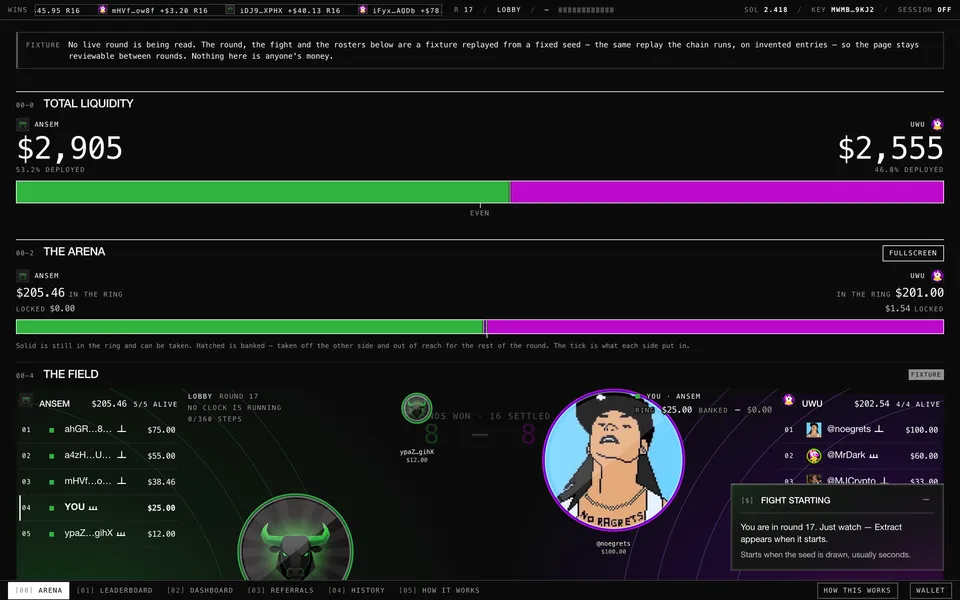
ROAMA virtual exploration platform for South Africa: walk real routes, fund work with vulnerable children.
privateHardcutA control room that runs a live show from one screen.
privateKōbōHow my agents are set up, and why.
privatetelegram-cliRead-only Telegram access for agents.
privateSpecialist CreatorBuilds specialist agents from the working methods of the best practitioners.
privateXScraperA full-history scraper for X accounts and a daily brief across hundreds of crypto accounts.
privateMarketing agentsAn early agent system for marketing work, with monitoring.
privateytaudioPulls a YouTube channel’s audio and transcribes it on the machine.
privateLiquid GlassApple’s liquid-glass effect for React, with real refraction.
privateObsidian OpenCodeAn Obsidian plugin with a coding agent built in.
privatewhatsapp-cliFixes to a WhatsApp command line client.
MemePad and NeotradeThe launchpad, the airdrop marketplace, the Solana contracts, a trading app and a copy trader.
privatecache and d-utilsA caching library and shared utilities.
DegenZoneA bonding-curve launchpad on Solana with live candles and a TradingView front end.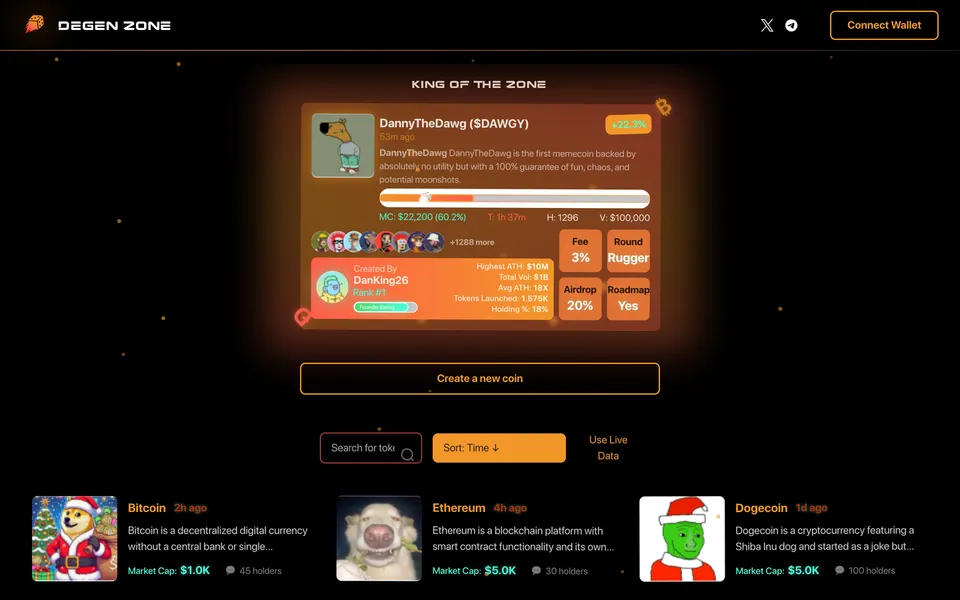
ChatGodA multi-model AI assistant on Telegram and WhatsApp, before tool calling existed.
privatego-oaiAn OpenAI client for Go.
privateSuperFansA SocialFi launchpad on Solana: a TypeScript front end, a Go backend and an Anchor program.
privateBetRoyaleA token raise, its smart contract, the deposits and the backend. The tech worked, the marketing didn’t.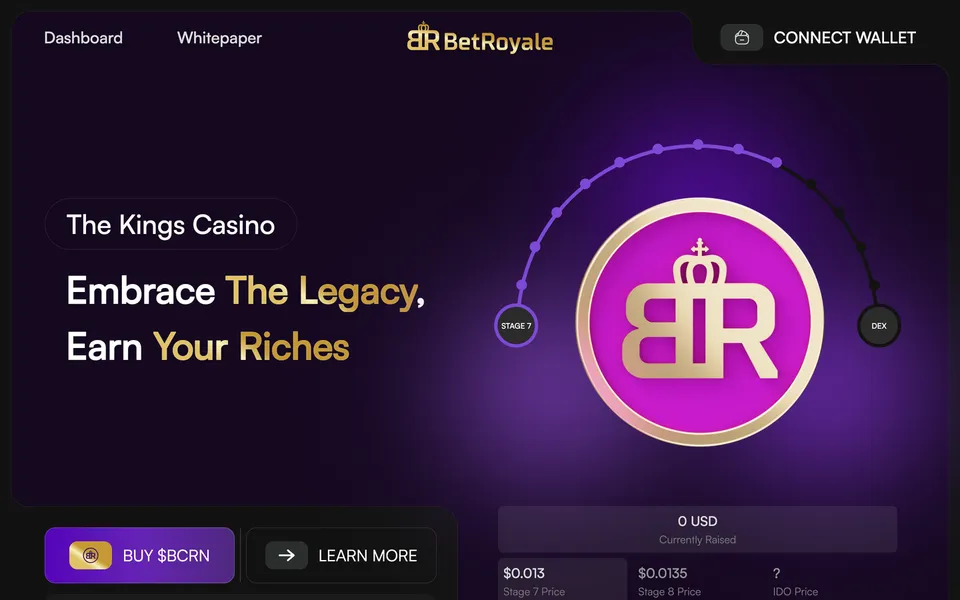
Telegram outreachOutreach tooling for Telegram.
privatePharma company dataA database of pharmaceutical companies and their financial statements.
privateGo Micro contributionsOne of the maintainers of Go Micro: a JetStream store, CI and releases, a test framework and an RPC server rewrite.
SuperspacesTwitter Spaces analytics and a SocialFi platform. I ran the support services.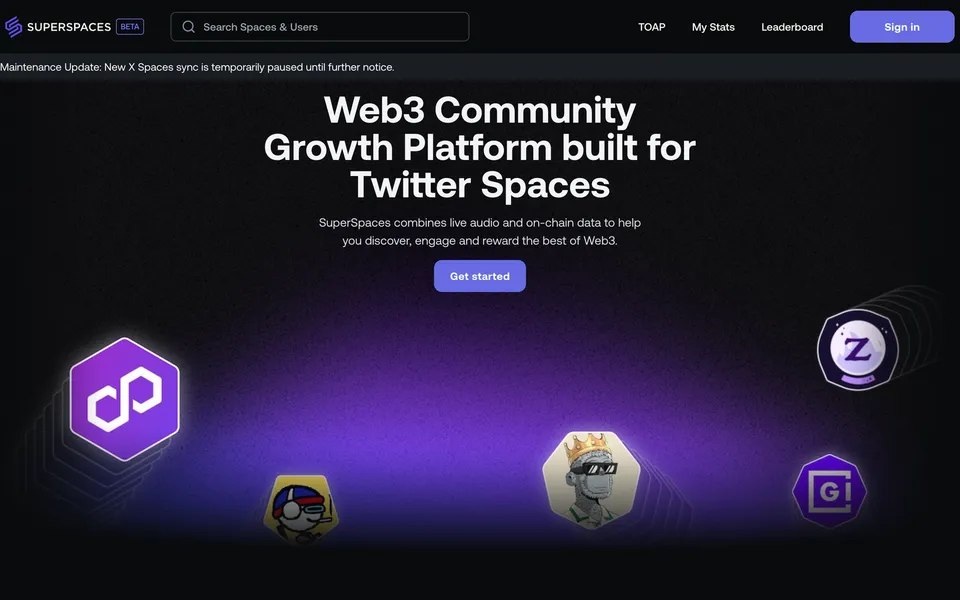
TikTok signing and APITikTok’s request signing, reverse engineered, and an API client on top.
privateSweet Streams servicesThe second build: Go microservices tracking Instagram and TikTok live streams.
privateManjaro systemd-boot integrationPacman hooks so Manjaro kernels install correctly under systemd-boot.
open sourcegoinstaA Go client for Instagram’s private app API, including its encrypted login. 208 stars.
open sourceDotfilesFive years of dotfiles and server config.
Look Who's Streaming / Sweet StreamsAlerts when someone goes live on Instagram, Twitch, Twitter or YouTube. Built twice, first in Django.
privatepycharm-projectsWhere it started: a calculator, a weather app, an LED controller and my first deep-learning notebooks.
open sourceIf you're building something, I want to hear about it. I read DMs.